
You may have noticed a new feed in the right pane of this blog. I'm calling it "Equipment News" and what's in it will change as dreams change. What dreams you ask?
Well, in digital picture taking, camera is one component. An obvious first one, as you need something to take that photograph WITH, then you go on through software processing and printing stage. Back to that camera, I say you need to record an image. The basic choice is the so called point-and-shoot and dSLR. In P&S category, there is the majority of consumer level cameras, the ones you find in every household, and the arguably PRO level P&S, that cater to more advanced shooters who want RAW capture, full manual controls, high quality lens etc. In the latter, there is only a few contenders and seemingly only ONE per manufacturer. They all hover in the $400-$500 price range (isn't it interesting?) with the exception of Leica, but you want pretty name, you pay.
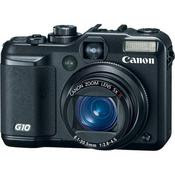
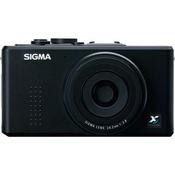
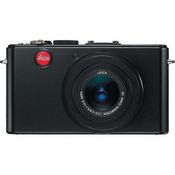
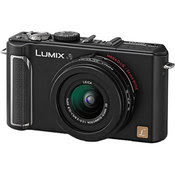
Click on an image to go to a review site.
Canon G10 & Sigma DP2
Leica D-LUX 4 & Panasonic Lumix DMC-LC3 (practically same innards)
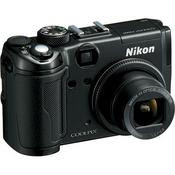
Nikon P6000
So here you have a quick way of following news on these MEGA point-and-shoots. Currently the Panasonic/Leica may be the choice of the day, not without limitations of course.
I don't own any one of these at this point, although I am definitely tinkering with the idea. One main thing I can say here is, that we've hit the max sensible pixel count it appears as Canon got it in G10 to 14. As it was stated over and over, here and everywhere, pixel count is one of the factors, but it's the pixel size (individual receptor within it sensor) that makes it or breaks it. The idea being, the smaller the pixel the higher the gain needed to deliver "same" goods. Sensors themselves don't grow any more, but more and more pixel get cramped into the space. In other words, in order to improve image quality it's the dimensions of the sensor must increase, so as to facilitate a larger receptor size. Unfortunately, we're talking a P&S camera that by default implies a small device. There is only so much that can fit into it and it is NOT about fitting a larger sensor, but rather a larger lens so it can provide image circle corresponding with the larger sensor . Optical design has made huge leaps in recent years, so we can expect an eventual lens design of a compact size and larger than today coverage. But until that happens, we'll continue following new yet inadequate small camera designs. These BIG guys are no doubt superior to their less expensive counterparts, but they have a long way to go, to be freely accepted as a larger camera replacement. Perhaps we should skip the "larger camera" idea altogether, as there is always going to be a performance gap between the two. Let's call it a backup that's capable of great photography, especially if you subscribe to the idea:
"it's the photographer,not the camera"
Our wait continues though.
...


 Posts
Posts


